Some Revit Stuff
August 19, 2014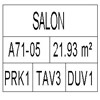
We are back! Here are some Revit components I’ve created for a project. These and other cool downloads can be found at revitcity.com

We are back! Here are some Revit components I’ve created for a project. These and other cool downloads can be found at revitcity.com

This is an interesting material project of this year’s computation-based Basic Design II studio. Students experienced a well-known structural system tensegrity, composed of cables, joint details, and aluminum sticks. Although their overall macro form had serious problems, the exploratory process of this group was very successful. *Students: Deniz Ağaoğlu, Fatma Sezgin, Serkan Ateş, Aysel Abasova, Kardelen Kıroğlu, Sedat Tolga Kalcıoğlu, İlayda Yörük, Nikol Sergici, Kıvılcım Dişli, Uğur Polat

Here is another computation-based Basic Design II final project. It is made of paper tubes, joined angular by nuts and bolts in order to give the desired form. This group had serious problems with project development and exploration, but anyway they managed to finish this inspirational prototype. *Students: Abdullah Selim Buldu, Ecem Aksoy, Lachyn Tuliyeva, Neda Khorshidi, Selenay Geyik, Sevgi Yücel

It is the geometry of Mantı components, that enable quick cooking for its ingredients (usually meat) but also is a structurally stable form. I’m excited to see this transformation as a structural capacity, half folding, and bending behavior of these shells. Two years ago, one of the final projects of our computation-based Basic Design studio experimented with similar forms to see how a relatively weak surface material could be transformed into a structurally better one. I don’t know if this similarity…
Another Turkish translation from my Ph.D. The paper is titled “CAD Smart Objects: Potentials and Limitations”, presented by Magdy Ibrahim, Robert Krawczyk, and George Shcipporeit at the 21st eCAADe Symposium in 2003. It is a brief introduction to today’s CAD and BIM concepts. You can find this paper in CuminCAD’s database. Below is the Turkish version, which I translated in 2005: CAD SMART OBJECTS: POTENTIALS AND LIMITATIONSMagdy Ibrahim, Robert Krawczyk, George Shcipporeit Özet Yıllardır, BDT (bilgisayar destekli tasarım; Computer Aided…
This is my Turkish translation of the 1997 article by Charles Jencks, “Nonlinear Architecture: New Science = New Architecture?”. Very short but the cult text explains the emergence of a new technology-based architecture. Although very old, it is still an up-to-date discussion for computational design research. NON-LINEAR ARCHITECTURE: NEW SCIENCE = NEW ARCHITECTURE ? Charles Jencks Yüz yıldan beri pekçok mimar yeni oluşan yaşam koşullarının yeni bir mimarlığı doğuracağını söylemişlerdir. İronik olarak, bu söylemler Modernistler tarafından gelenekselleştirilmiş, ancak zaten bilinen…
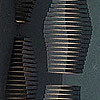
Third and the final outcome of the Animate Patterning workshop is coordinated by Mehmet Ali. Students tried to develop a kirigami-like surface animation (which is also a good solution to my one-servo question) while they studies numerous variations. They ended up with this panel, ready to be moved by Arduino; The workshop is organized together with Mehmet Ali Altın and Fulya Akipek. Students are, Murat Akırmak, Gizem Ceyhanlıer, Cem Kıyak, Bartu Can, Tuğba Levent, Seda Orhan, Gizem Gümüşkaya, Yunus Emre…

Here is another student project from the three-day workshop we conducted together with Fulya Akipek and Mehmet Ali Altın. Briefly, the idea was to develop a system of cogwheels that spin together to animate an entire pattern. It was about to develop a kinetic system with a simple Arduino-based setup, probably with one servo and a motion sensor. The integration of the cogwheels system and the underlying pattern was interesting research. Although it seemed very simple for a servo setup,…
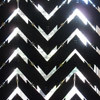
This is one of the works of the three-day workshop at Eskişehir Anadolu University, called “Animate Patterning“. This project is based on our previous folding experiment posted here, while students advanced it, testing a folding style called “Miura”. They built a 2.5m x 1m folding pattern, explained briefly here. After analyzing, and testing the folding technique, they drew the tessellation composed of a single parallelogram. They joined the structure together with hinges and screws. Finally, an Arduino setting is added including a continuous…
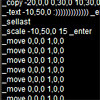
It seems that our first-year students of architecture, interior design, and industrial design take Rhino’s macro functionality very seriously. This encourages us to study algorithmic techniques more and more in the freshman year Design Computing class. Below are some of the results of this week’s assignment. They explicated the modeling process of their prototiles into macro codes, ready to be molded. Zeynep Dutipek developed the macro to reconstruct her prototile with different parameters. She also had a smile there (if you watch carefully) Meltem Bayrak…