
BIRE-PAN
This project aims to promote the widespread use of earthen architecture in new urban and rural developments, in line with the overarching goal of sustainable cities. The potential solutions earthen architecture offers across various dimensions, such as human health, efficient resource utilization, locality, economic viability, and cultural continuity, can only be realized to the extent that they are integrated into the construction sector. When the vernacular knowledge embedded in local architectural solutions is enhanced through modern design-to-production technologies, earthen architecture can become a vital part of contemporary architectural practice, capable of being prefabricated in factories and adapted to modern building codes and standards.
Examples of structures built with precast earthen panels and blocks manufactured in factory settings exist in the literature. However, it has been observed that these examples commonly rely on cement additives for soil stabilization or adopt solutions that do not align with human health and sustainability criteria. The objective of this project is to utilize biological additives in factory-produced earthen building components and to achieve appropriate sustainability standards in this domain.
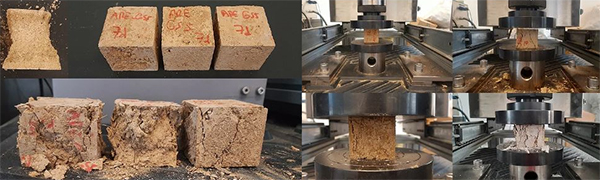
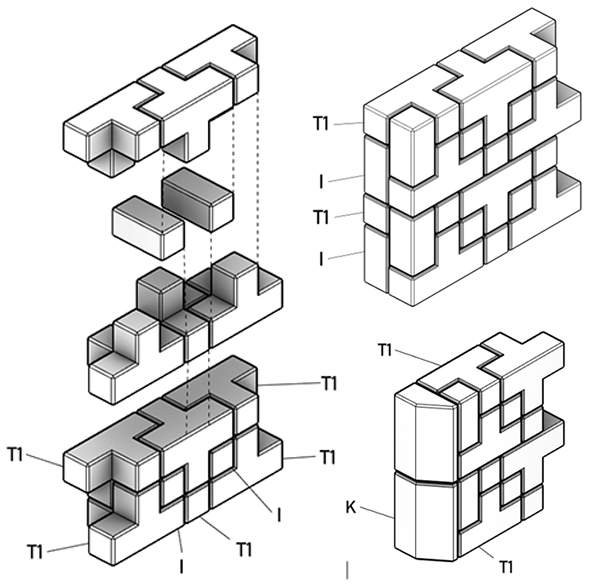
Within the scope of the project, an interdisciplinary study was conducted to test formulations integrating various plant-based components and bacteria into earth materials. These new mixtures were evaluated across diverse performance metrics, including structural strength, water resistance, crack mitigation, and lightweight properties. Following the standardization of this building material (BIRE) for mass production, the subsequent goal in designing the precast building components was to expand the design space via computational design and fabrication technologies, establishing a design-to-production system (BIRE-PAN) that enables new form-pattern experimentation. Throughout this process, design was leveraged as an added value, aiming to establish a customizable design-to-production system (mass customization) rather than replicating a singular product in bulk (mass production).
Objectives:
- Enhancing soil formulations used in the rammed earth construction technique through biotechnological methods, drawing upon biomaterial research—an emerging domain within contemporary design research
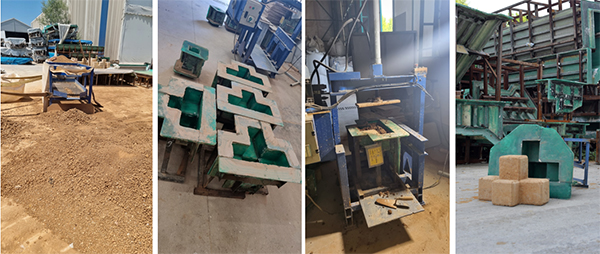
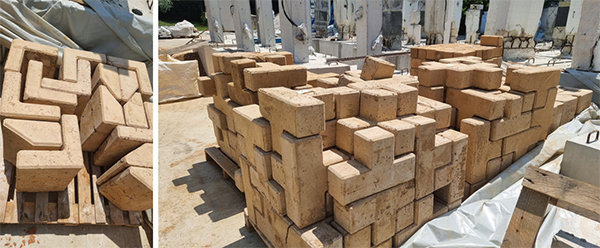
- Adapting in-situ rammed earth construction systems into factory-manufactured building components and modern construction technologies
- Establishing a computational design-to-production system grounded in circularity, informed by a Life Cycle Assessment (LCA) approach
- Validating the designed production system through the construction of a 1:1 scale Prototype Space
- Conducting on-site measurements within the prototype space to evaluate and report on various performance criteria in terms of building biology and ecology
- Organizing seminar series, participating in events such as symposia and panel discussions, and producing academic publications for knowledge sharing and dissemination
- Concurrently sharing insights gained throughout the process across diverse media platforms (film, web, social media)
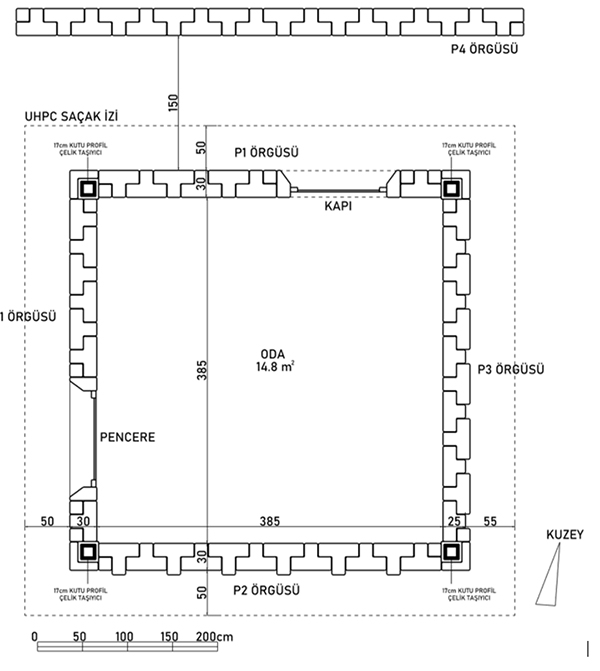
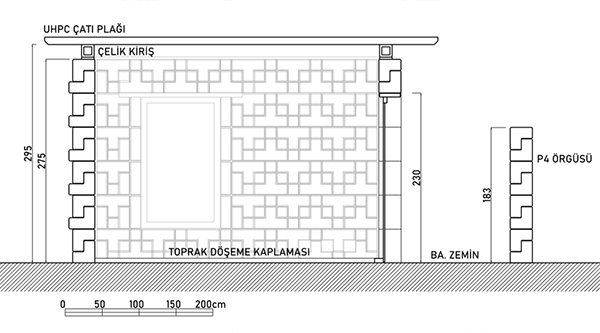
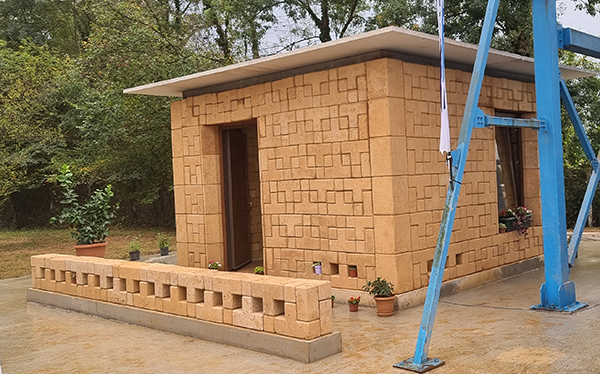
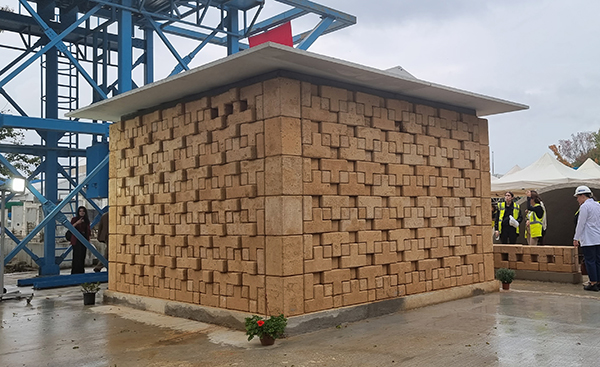
Project Coordinator: Assoc. Prof. Dr. Fulya Özsel Akipek, BİLGİ Department of Architecture
Project Team: Prof. Dr. Tuğrul Yazar, BİLGİ Department of Architecture, Assoc. Prof. Dr. Muammer Özbek, BİLGİ Department of Civil Engineering, Assoc. Prof. Dr. Büşra Aktürk, BİLGİ Department of Civil Engineering
Research Assistants: Department of Architecture Students: Elif Aybüke Turgut (MSc), Fatime Mermerci (MSc), Özge Miskioğlu (MSc), Yaren Nur Özgen (BSc). Department of Civil Engineering Students: Kağan Karadavut (BSc), Damla Berrak Çalık (BSc), Deniz Aktay (BSc), Ali Berk Bozan (BSc). Department of Genetics and Bioengineering Students: Buket Yeşiloğlu (BSc).
External Team Members: Prof. Dr. Hatice Gülen, İstinye University, Faculty of Engineering and Natural Sciences, Prof. Dr. Bilge Işık, Kerpic Network (Advisor), Dr. Birsen Cevher Keskin, TÜBİTAK-MAM / GEBI (Genetic Engineering and Biotechnology Institute), Specialist Nurçin Öztürk, TÜBİTAK-MAM / GEBI.
Consultants: Özgül Öztürk, A Mimarlık, And Akman, Merve Titiz Akman, YBE (Building Biology and Ecology Institute), Sinem Serap Duran, Videographics / Visual Communication, Melodi Simay Acar, Kinetikhane
Main Sponsor: FIBROBETON YAPI ELEMANLARI SAN. İNŞ. VE TİC. A.Ş. Muhammed Maraşlı, Board Member, Hasan Bilgin, Yasemin Hatipoğlu, Aslı Hatipoğlu.
Cite this post
Related Posts
Common-action Wall
January 9, 2018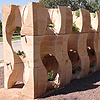
In 2017, during the 4th International Architecture Biennial of Antalya, we constructed the Common-action Wall in Karaalioğlu Park. We designed this architectural prototype as a wall that enables the growth and harvesting of edible plants for park users. To facilitate plant growth and ensure sunlight access, as well as to direct rainwater toward the plants, we conducted extensive studies on minimal surfaces. Ultimately, we found that the gyroid form met all the requirements. It proved advantageous during the production process,…
Robotic Earthcrafts III
August 16, 2026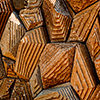
Last month, we completed the third edition of the Robotic Earthcrafts workshop series, which I co-organized with Fulya Akipek, following the first in 2018 and the second in 2023. An earthen mixture composed of clayey soil, lime, fibers, and cement was rammed into molds produced via robotic hot-wire cutting. The geometry of the fabricated wall is based on a hexagonal grid and features a Truchet-like variation. Constructed using four different block types, the wall was completed within 5 days and…
Earthbound
August 14, 2026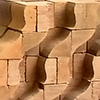
Rammed earth is an unpredictable, labor-intensive building material, and far less durable than concrete. It cannot deliver the standard strength expected by engineering academia. And perhaps it is for the better that it cannot. Because it tells us an entirely different story. It reminds us architectural thinking that dares to look outside the box. What I want to share here, is not just a simple studio project, but a profound life lesson for many of us here, lived in the…
Robotic EarthCrafts II
April 1, 2025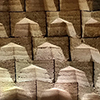
Robotic EarthCrafts II occurred in the summer of 2024 at Istanbul Bilgi University, seven years after the first. Together with Fulya Özsel Akipek, Nilüfer Kozikoglu, Abdullah Mallah, and Halit Mallah, we experimented with the robotic fabrication of molds for rammed-earth structures. The focus shifted toward a human scale based on the experience gained from Robotic EarthCrafts I. At the workshop’s core were spatial systems resembling muqarnas, which incorporated non-planar geometric transitions. Unlike the first workshop, we utilized a parametric model to design and generate robot…
Robotic Earthcrafts Student Project: ZOM
November 6, 2018
This project is developed in the summer workshop titled Robotic Earthcrafts conducted at İstanbul Bilgi University Architectural Design graduate program. Students call this project “ZOM”. Students are Murat Sökün, Zeynep Çakmak, and Özlem Güven. We organized the workshop together with Fulya Akipek and Hülya Oral. You can find more details about the workshop here. In this project, a simple robot code created the EPS molds of the rammed-earth module. Below are some of the photos of the design and construction…