designcoding
About Table of Contents Keywords Monthly Archive
Support designcoding!

#contouring

19 posts

Contouring and Folding Together

March 7, 2015
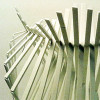
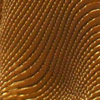
This is a project proposal designed at the workshop organized together with Simge Esin Orhun and Fulya Akipek as part of the International Wood Day Exhibition in İstanbul. This time, the final Grasshopper definition is created “after” some experiments with physical models. Here is the first model showing the idea inspired by the folding chairs studied here. I realized that in order to make a “wall” instead of a chair, it would be a good idea to extend the edges of the…

Contour-fold Structure

February 1, 2015

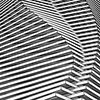
Euclidean constructions, when represented computationally, rely on algorithms and mathematical principles to generate geometric shapes and forms. Through precise calculations and logical operations, a computer program can emulate the actions of a compass and straightedge, constructing lines, circles, and polygons with accuracy and efficiency. These digital incarnations of Euclid’s timeless techniques enable the exploration of geometric concepts and the creation of visually captivating representations. This project is interesting because of the Euclidean construction underneath. Initially, I studied this type of…

Waffle Macro

May 7, 2014

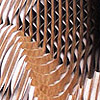
Here are two macros that automate some of the classical structural styles in today’s architectural geometry. They could be developed more to include joint details, however. It is a relaxing experience to study macros when the process doesn’t have algorithmic expressions (such as recursion, iteration, or conditionals). It is today’s subject in the first-year design computing course at İBU. The first one requires at least two curves already present in order to define a lofted surface (to be “waffled”): The second…

Void by Subtraction

April 16, 2014

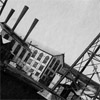
Here is the winning team of this year’s mid-term jury competition in the first-year Basic Design studio at İstanbul Bilgi University. The challenge they undertook was called “Void by Subtraction.” Initially, the students engaged in a series of short-term exercises exploring solid and void relationships. Alongside the studio sessions, they honed their digital modeling skills through Architectural Geometry courses. Their task was to create a contoured structure within a restricted 8m3 volume. Through various iterations using clay and foamboard prototypes,…

Contouring Student Works

April 7, 2014

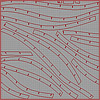
Design Computing classes conducted a “voluntary” assignment; a “contouring” fabrication, that outputs physical prototypes of the previous parametric wall assignment. They worked very well with the corrugated cardboard in fact and extended the simple contouring exercise in Rhinoceros into a design study of patterning and transparency. It seems that corrugated cardboard is a perfect material to study the shift from digital to the material. Below are some of the student works that study various angles of contouring on different seamless surface…

Testing the Nesting

May 28, 2012

Here I am testing the nesting. RhinoNest is a plug-in for Rhino and a set of components for Grasshopper. I tested it using my old interlocking fabrication definition (here) and (here). I downloaded RhinoNest from this website and installed it. However, I sounded a little complicated at first sight. Then I found a sample definition (here) and modified it a little bit to meet my purposes. First of all, I added orientation components (grey group below) to align all sections to the WorldXY…

Paramod 2011 Fabrication

March 21, 2012

After a reviewing a short story of digital architecture from Branko Kolarevic, we looked at the roots of the theory and the concepts derived from it such as digital fabrication, building information modeling and parametric modeling. After a short brief, we’ve discussed about the final projects. Next week, we’ll start studying final projects and start to look at individual problems developed from them. Final submissions will highly be related with their design problem; it might be only digital animations, or…

SPEC Student Examples

March 7, 2012

SPEC disappeared from our garden suspiciously. Hopefully, we’ve already finalized its parametric survey. Can create the original model by measuring exact corner coordinates. Then, it manipulated shape by creating diverse vectors for each shape. Emre has also tried a similar approach. Can be definition was too long, and did not use data trees, therefore it is slow. But it’s very effective at offering a solution for animation. I re-captured his frames for animation: Another innovative solution came from Yağız along…

Smooth Sketch Data Recorder

February 29, 2012

Here is a funny sketching system for the “SPEC” homework. Four (or more) points are created using 2d sliders (MD slider) and decomposed these points into x,y and z numbers. Then, they are re-populated in 3d points by changing their plane. X coordinates are connected into Y, and Y coordinates are connected to Z’s. Tricky part comes then, the X number is defined by a serie of numbers started from 0 to 30 by 1. After that, polylines are constructed using…

« 1 2
  • Chapters

    • Algorithms
    • Discourses
    • Fabrications
    • Studios
  • Explore

    • All Keywords
    • Table of Contents
    • Monthly Archive
    • #tetrahedron
    • #galapagos
    • #archimedean-solid
    • #vector
    • #euclidean-construction
    • #3d-max
    • #dual
    • #cycloid
    • #truncated
    • #sandblasting
    • #puzzle
    • #icosidodecahedron
    • #animation
    • #boolean
    • #nesting
    • #art
    • #geodesic
    • #fourier
    • #space-syntax
    • #music
  • Search

  • Support designcoding!

  • Enjoying designcoding? Support me on Patreon to keep it growing. Thank you!

  • copyright 2026 designcoding.net | about | privacy policy | end user license agreement