
Method of Descartes
When I was younger, among the branches of philosophy, I had studied a little logic and, among the subjects of mathematics, geometrical analysis and algebra, three arts or sciences which looked as if they ought to contribute something to my project. But in looking at them, I took care, because, so far as logic is concerned, its syllogisms and most of its other instructions serve to explain to others what one already knows or even, as in the art of Lully, to speak without judgment of things about which one is ignorant, rather than to learn what they are. Although philosophy does, in fact, contain many really true and excellent precepts, mixed in with them there are always so many injurious or superfluous ones that it is almost as difficult to separate them as to draw a Diana or a Minerva out of a block of marble which has not yet been carved. Then, so far as the analysis of the ancients and the algebra of the moderns are concerned, other than the fact that they deal only with really abstract matters, which have no apparent use, the former is always so concentrated on considering numbers that it cannot exercise the understanding without considerably tiring the imagination, and in the latter is so subject to certain rules and symbols that it has been turned into a confused and obscure art which clutters up the mind rather than a science which cultivates it. Those were the reasons why I thought I had to look for some other method which included the advantages of these three subjects but was free of their defects. And since a multitude of laws often provides excuses for vices, so that a state is much better ruled when it has only a very few laws which are very strictly observed, I thought that, instead of that large number of rules which make up logic, I would have enough with the four following rules, provided that I maintained a strong and constant resolution that I would never fail to observe them, not even once…. (he continues)
Rene Descartes, “Discourse on the Method”, part two, (Translated by Ian Johnston)
He’s utilizing philosophy to redefine a relationship between algebra, geometry, and logic. I think he is talking about a revolution he’s about to start in geometry, as we see it today. The rest of the book was also interesting to know him, and his path in life.
Cite this post
Related Posts
La Geometrie
May 15, 2012
…While it is true that every curve which can be described by a continuous motion should ve recognized in geometry, this does not mean that we should use at random the first one that we meet in the construction of a given problem. We should always choose with care the simplest curve that can be used in the solution of a problem, but it should be noted that the simplest means not merely the one most easily described, nor the…
Architectural Geometry
August 16, 2012Here is the preface of the famous book “Architectural Geometry”. It simply encourages me to learn new things every day even sometimes it seems to become impossible. Geometry lies at the core of the architectural design process. It is omnipresent, from the initial form-finding stages to the actual construction. Modern constructive geometry provides a variety of tools for the efficient design, analysis, and manufacture of complex shapes. This results in new challenges for architecture. However, the architectural application also poses…
Algorithmic Roots of Geometry
May 28, 2012Here are several passages from Shamos’s dissertation thesis, where he is studying the history of geometry from the perspective of a computer scientist. This topic always fascinated me. However, this is a good reading for the algorithmic roots of geometry. …Egyptian and Greek geometry were masterpieces of applied mathematics. It is well established that the original motivation for tackling geometric problems was the need to tax lands accurately and fairly and to erect buildings (Eves, 72)… Euclid’s chief contribution to…
Computational Geometry
April 14, 2012Searching for a meaning to today’s popular design methods and concepts we are all going after. Most of the abstract problems, today described within architectural domains, are very parallel to another field defined by M. Ian Shamos in 1978. Here is the introduction paragraph of his PhD thesis; Geometry is a subject that has captured the imagination of Man for at least 2500 years. It is at the very foundation of Art, Architecture, and Mathematics, and plays a central role…
Curvature Map on Terrains
September 17, 2026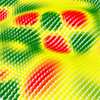
This is the last of the site analysis tools we previously used in the midterm project of first-year architecture education. As you may recall, we previously introduced a tool that generates topographies based on specific parameters. Afterward, we examined two tools that perform slope and flow analyses on these topographies. Today, we are presenting a tool that analyzes curvature. This topic actually constitutes one of the interesting intersection points between architectural design and differential geometry. Curvature is not something architects…